
How to care for dark marks after breakouts
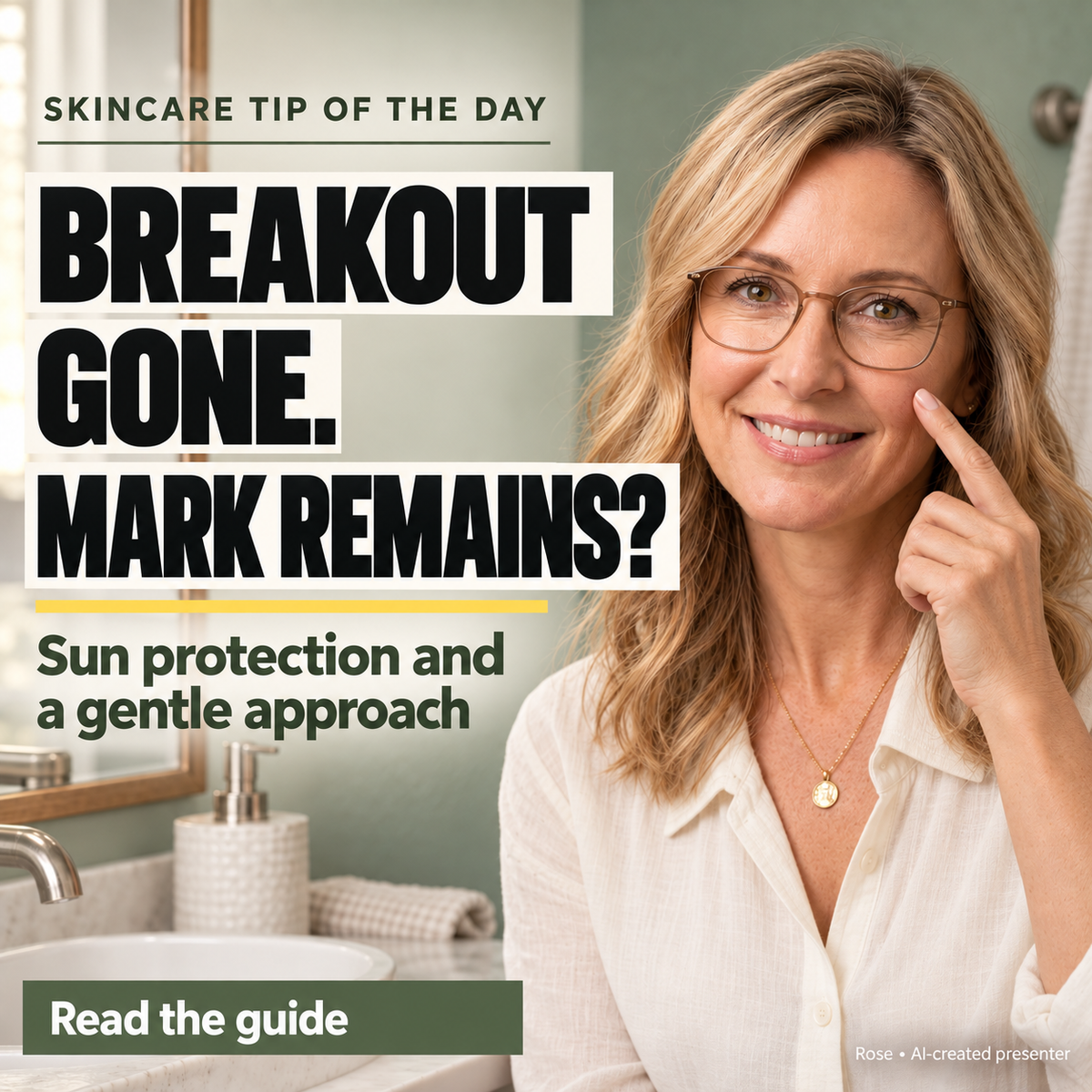
The breakout has settled, but the spot it left behind is still there. That flat patch of darker color may be post-inflammatory hyperpigmentation, which is extra pigment left after inflammation. The most useful plan has three parts: manage new breakouts, protect the skin from sunlight and choose any additional skincare with care. [1],[2]
You do not need to attack the mark with every brightening product you can find. A consistent routine that avoids unnecessary irritation gives you a better foundation for deciding what to add.
First identify what you are seeing
A flat dark mark is different from an indented or raised acne scar. A product selected for uneven-looking color cannot be expected to fill a depression or flatten raised scar tissue. If you are unsure which you have, a dermatologist can help identify the concern and the options that fit it. [2]
Ongoing acne matters, too. Each new inflamed breakout can create another mark, so keep working with an effective acne plan rather than abandoning it for a cosmetic serum. Picking and squeezing can worsen acne and increase the risk of lasting marks or scars. [3]
Make sun protection part of the plan
Sunlight can make pigment concerns harder to manage. For dark spots, the American Academy of Dermatology recommends broad-spectrum, water-resistant SPF 30 or higher and highlights tinted sunscreen containing iron oxide, which also helps protect against visible light from the sun. [1]
Choose a shade and finish you like enough to wear, and follow the sunscreen’s application and reapplication directions. A hat and shade help make protection practical. Your brightening serum, moisturizer or morning makeup does not remove the need to check that sunscreen step.
Research supports paying attention to this detail. In a melasma trial, an iron-oxide-containing sunscreen used alongside prescribed hydroquinone produced better pigment-related results than a UV-only sunscreen used with the same treatment. Melasma is different from post-acne marks, but the study helps explain interest in visible-light protection in pigment care. It is not a reason to start hydroquinone on your own. [4]
Where Recover can add to your routine
Our Recover Vitamin C Serum combines sodium ascorbyl phosphate, a vitamin C derivative, with ferulic acid and vitamin E. Sodium hyaluronate helps attract water, while coconut oil and jojoba oil are also part of the formula. If you want to explore vitamin C for uneven-looking tone, Recover brings those ingredients together in one serum. [5]
Vitamin C appears in dermatologist guidance on ingredients used for dark spots, but Recover’s finished formula has not been shown in the cited research to clear post-acne pigmentation. Its vitamin C percentage is not disclosed. Consider it a cosmetic addition rather than a replacement for acne treatment or a promise that a mark will disappear by a deadline. [1],[5]
Apply one or two drops after cleansing and any toner you already use. Let it absorb before moisturizer. Keep it away from your eyes and stop if irritation occurs. You can retain the cleanser and moisturizer that already suit your skin while evaluating this one addition. [5]
Give fading a realistic timeline
Once the trigger is controlled, some superficial spots take six to twelve months to fade, and deeper pigment can take longer. That can feel slow, but it is a good reason to avoid changing your entire routine every week. [1]
If you take progress photos, use similar lighting, camera distance and makeup each time. Look for a pattern over time rather than judging tiny day-to-day differences. Seek individual advice for painful acne, scarring, persistent marks or a spot that is changing in an unfamiliar way.
You can support a more even-looking complexion with a patient, purposeful routine. Begin with the cause and sun protection, then add only what serves your skin.
Sources
- American Academy of Dermatology: How to fade dark spots in darker skin tones
- American Academy of Dermatology: Acne signs and symptoms
- American Academy of Dermatology: Acne tips for managing
- Castanedo-Cazares et al. (2014): Near-visible light and UV photoprotection in melasma
- La Colibri: Recover Vitamin C Serum
Leave a comment