
How can my skin feel oily and tight at the same time?
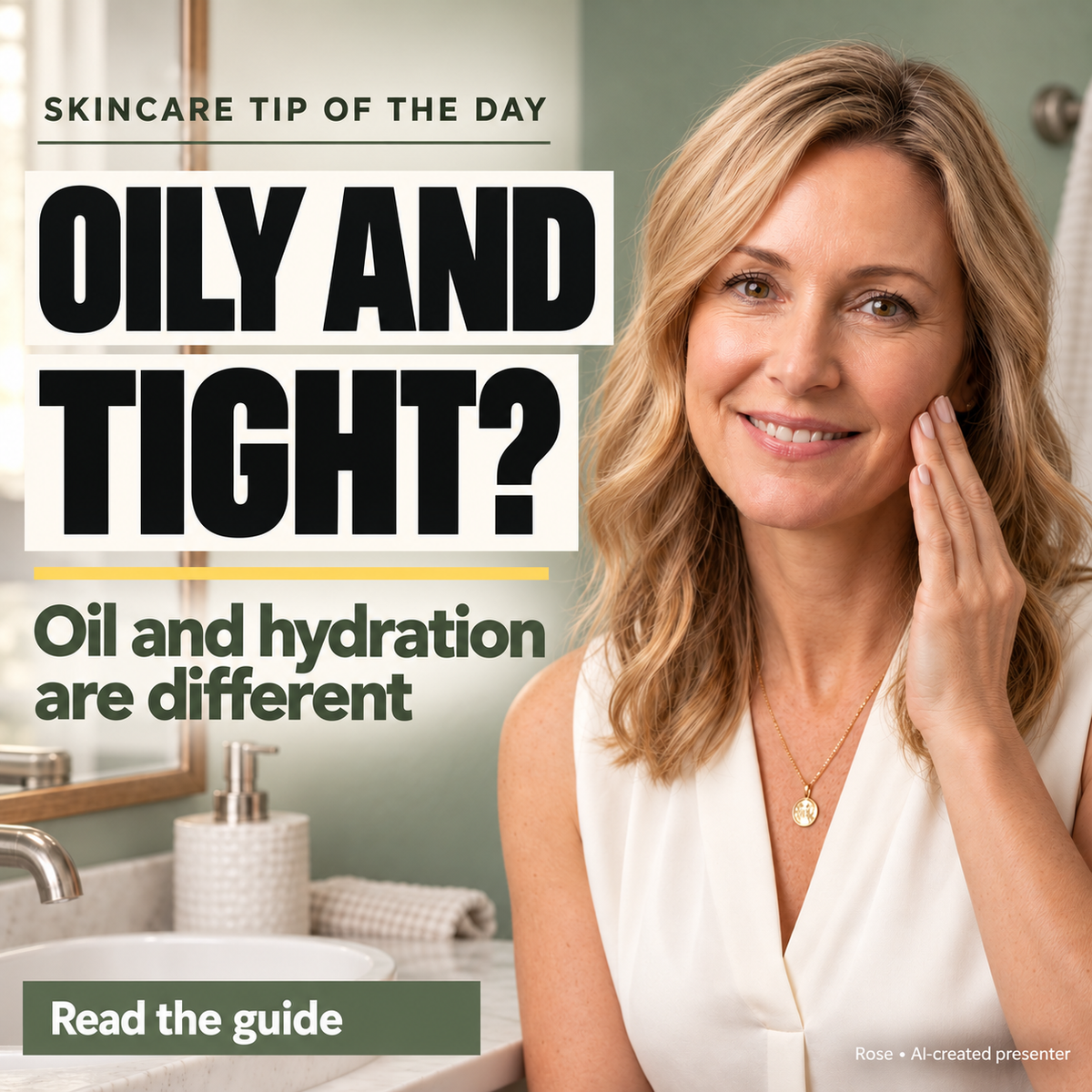
A shiny forehead and tight cheeks can absolutely show up on the same face. Oiliness is something you see or feel at the surface; tightness is a sensation. They are useful clues, but neither one gives you a complete diagnosis.
Instead of trying to squeeze your face into a single category, look at where the shine appears, when the tightness starts and what happened just before it. That is where a useful routine adjustment often begins.
Your face can have different needs in different places
Combination skin is oilier in some areas and drier in others. Sensitivity can also occur alongside oily, dry or combination skin, so an oily area does not rule out a reaction somewhere else.
Think about a typical morning. Perhaps your cheeks feel stretched immediately after washing, while your nose becomes shiny a few hours later. Or perhaps the tightness started when you added a new treatment. Those are different patterns, and it helps to keep them separate instead of calling both dehydration.
Surface oil and hydration describe different properties. Hydration refers to water in the outer skin layer. Research measures oil and hydration separately, and an oily skin type does not reliably predict how hydrated skin is.

Take a closer look at the cleansing step
Count the washes you actually do. A cleanse in the shower counts, as does the one after exercise. Adding another wash at the sink simply because it feels like the official start of skincare can create an extra step you never intended.
Overwashing can contribute to dryness. Some adults with dry or sensitive skin do better with a morning water rinse and cleanser in the evening, while others need a different schedule. Your skin and any treatment plan should guide that choice.
Also notice temperature and friction. A comfortable wash does not need very hot water or repeated rubbing. Removing an unnecessary repeat can be a useful first adjustment.
Give each area the care it needs
You do not have to apply extra product to every part of your face because one area feels dry. Keep the intended amount and application areas in mind, and observe how the individual zones respond. This makes the routine more deliberate without making it more complicated.
For example, wanting a less shiny finish is a cosmetic preference. Persistent burning, itching, scaling or a rash is a reason to seek help with the cause. Treat those symptoms as their own issue instead of trying to cover them with another layer.
Consider a hydration serum when that is the gap
Revitalize Hyaluronic Acid Serum is an option for extra hydration to use alongside a moisturizer you already enjoy. It combines sodium hyaluronate with coconut and jojoba oils. Apply one or two drops to your fingertips, then gently pat and massage over your face and neck before moisturizer.
The appeal is a small, easy-to-place hydration step. It contains oils, so it suits someone comfortable with an oil-containing serum rather than someone specifically seeking an oil-free formula. Its hydration role does not make it an oil-control treatment or a diagnosis for tight-feeling skin.
Keep your familiar cleanser and cream while you evaluate the addition. That lets you notice the serum's contribution without wondering which of several changes affected the feel of your routine.
Let comfort guide the next decision
Avoid your eyes and mouth, and stop Revitalize if irritation occurs. If a product seems connected to persistent discomfort, do not keep layering over it in the hope that more moisture will solve everything. A dermatologist can help when symptoms continue or several products start to sting.
You can care for a shiny area and a tight-feeling area thoughtfully at the same time. Start with the pattern, keep what is working, and choose any addition for a clear purpose.
Sources and further reading
- Cleveland Clinic — What Is My Skin Type and Why Does It Matter?
- Cleveland Clinic — How Often Should You Wash Your Face?
- La Colibri — Revitalize Hyaluronic Acid Serum ingredients and directions
- Thadanipon & Kitsongsermthon (2020). Comparative study into facial sebum level, pore size, and skin hydration between oily-skinned and dry-skinned Thai women.
- de Melo & Maia Campos (2018). Characterization of oily mature skin by biophysical and skin imaging techniques.
Leave a comment